After being screened in the Cinema Falado Competition at Porto/Post/Doc 2025, “Ku Handza”, by André Guiomar, will be released in Portuguese cinemas on 25 June 2026. The chosen date coincides with Mozambique’s Independence Day, reinforcing the symbolic dimension of a film that looks at the country’s present through three stories marked by precarity, war, labour and everyday perseverance.
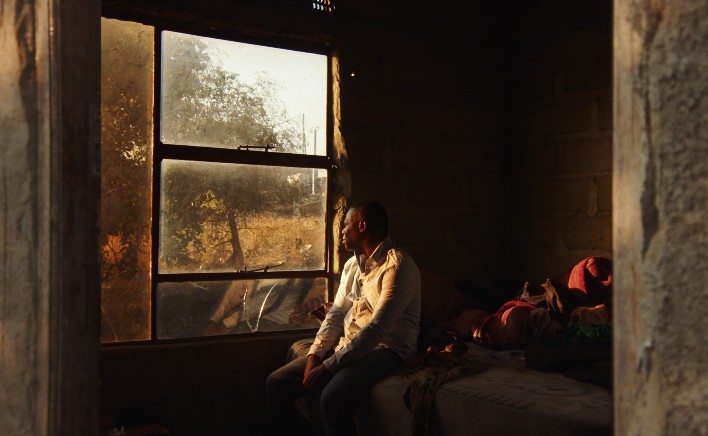
Produced by Real Ficção, in co-production with Olhar de Ulisses, “Ku Handza” is a feature-length documentary produced between Portugal and Mozambique. The film follows Benjamin Vilanculo, Eulália da Silva and Filimone Muchongo, three people whose lives do not intersect, but who together form a portrait of survival, dignity and resistance. The expression that gives the film its title, in the Changana language, refers to the image of a chicken searching for food and has become, in the Mozambican context, a metaphor for the daily struggle for subsistence.
The presence of “Ku Handza” at Porto/Post/Doc was part of the Cinema Falado Competition, a section dedicated to the diversity of perspectives, geographies and forms within Portuguese-language cinema. The film was presented at Batalha Centro de Cinema in November 2025, as part of a programme that brought into dialogue works from Portugal, Brazil, Cape Verde and other Portuguese-speaking territories.
Its theatrical release now extends the film’s public journey, following a festival circulation that includes screenings at Doclisboa, Porto/Post/Doc, IFFI Goa, Capri Hollywood International Film Festival, Festival L’Europe autour de l’Europe, International Black & Diversity Film Festival, ICJ International Film Award and Indianapolis Black Documentary Film Festival.
With “Ku Handza”, André Guiomar continues a body of work attentive to communities, social inequalities and forms of resistance across territories often perceived as peripheral. After “A Nossa Terra, o Nosso Altar”, centred on Porto’s Bairro do Aleixo, the director turns his gaze to Mozambique, a country with which he has maintained a connection for several years, seeking to give visibility to lives often kept outside the media sphere.
The theatrical release of “Ku Handza” therefore offers a new opportunity to follow a film that passed through Porto/Post/Doc and reaffirms the importance of documentary cinema as a space for listening, representation and critical reflection on the contemporary world.