
This year’s Porto/Post/Doc presents Another Story, a European programme revisiting the work of women filmmakers whose importance was sidelined or forgotten for decades. The initiative offers an encounter with other histories of documentary cinema, bringing to the fore works that challenge dominant narratives and explore new relationships between image, testimony and reality.
The programme presented in Porto brings together three films by three filmmakers with distinct paths: Věra Chytilová, Binka Zhelyazkova and Yvonne Scholten. Despite their different contexts and cinematic languages, their work shares an attention to women’s experiences, to the relationship between intimate life and structures of power, and to the search for cinematic forms capable of making visible voices and experiences that have remained at the margins.
Binka Zhelyazkova (1923–2011) was the first woman to direct a feature film in Bulgaria and one of the country’s most dissident cinematic voices. Censorship deeply marked her career: her first film was banned for decades, while several of her other works were prevented from circulating in Bulgaria. In “Lullaby”, Zhelyazkova returns to Sliven women’s prison to give voice to the women who gave birth there and to their children, in a documentary that confronts the conditions of imprisonment and the violence inflicted upon these women.
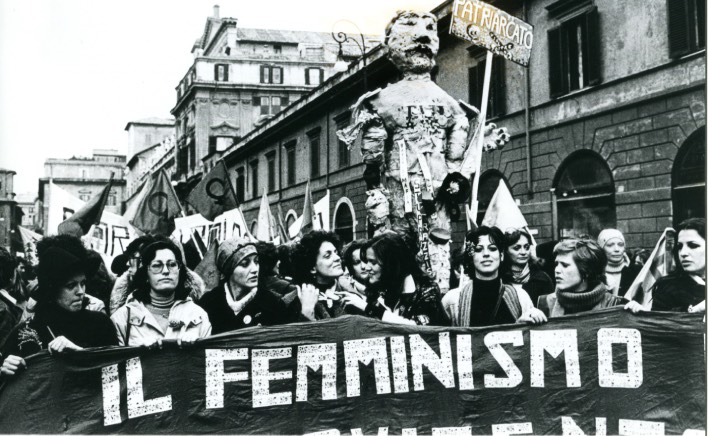
Yvonne Scholten (b. 1943) is a Dutch journalist, writer and documentary filmmaker. A correspondent in Italy during the 1970s, she made “Donna: Women in Revolt in 1980”, her only film, devoted to the history of women’s resistance in Italy. Through interviews and archival footage, Scholten revisits different moments in the history of feminist struggles in Italy, making visible women’s participation in political and social movements that have often been erased from historical narratives.
A central figure of the Czech New Wave, Věra Chytilová (1929–2014) was the first woman to study and graduate in directing at FAMU in Prague. Her cinema, marked by visual experimentation and a critique of social conventions, repeatedly addressed questions of gender, power and autonomy. After being prevented from directing for several years following the Soviet invasion of Czechoslovakia, she returned to filmmaking, maintaining a singular body of work until the end of her career. In “The Ceiling”, her graduation film, she follows a young model confronted with the choices she has made and the limitations of the life she has built.
Another Story is the result of a two-year European collaboration between four festivals, HER Docs (Poland), Festival dei Popoli (Italy), Doxumentale (Germany) and Sofia DocuMental (Bulgaria), the online magazine Cineuropa (Belgium), and Loreley Films (Switzerland), as guest curator. The project is a collective effort to reopen the history of cinema, recognise the legacy of pioneering women filmmakers and create space for new generations of filmmakers to find, in these images, other possibilities for telling the world.
ANOTHER STORY PROGRAMME
Lullaby
Binka Zhelyazkova
BGR, 1981, DOC, 60’
In Sliven women’s prison, women who entered prison while pregnant and gave birth while serving their sentences tell their stories, while the film observes the corridors, cells and everyday life of the children born there. Zhelyazkova’s approach gradually moves closer to the women, giving space to their own words and experiences. Made in a documentary style close to cinéma vérité, Lullaby was banned in Bulgaria and would only be publicly screened after the political changes of 1989.
Donna: Women in Revolt
Yvonne Scholten
NLD, 1980, DOC, 66’
Donna: Women in Revolt begins with a fascist attack on Radio Donna, a feminist radio station in Rome, in 1979, and traces eight decades of women’s resistance in Italy. Yvonne Scholten draws on interviews and archival footage to revisit struggles ranging from the fight for suffrage to women workers’ and peasants’ movements, antifascist resistance and second-wave feminism.
The Ceiling
Věra Chytilová
CZE, 1961, FIC, 42’
A graduation film made at FAMU, The Ceiling combines a documentary-like approach with a fictional narrative and introduces one of the questions that would run throughout Chytilová’s cinema: women’s struggle to escape the roles and expectations imposed upon them. The Czech National Film Archive describes the film as centred on female emancipation and highlights the presence of future figures of the Czech New Wave, including Jiří Menzel and Miloš Forman.